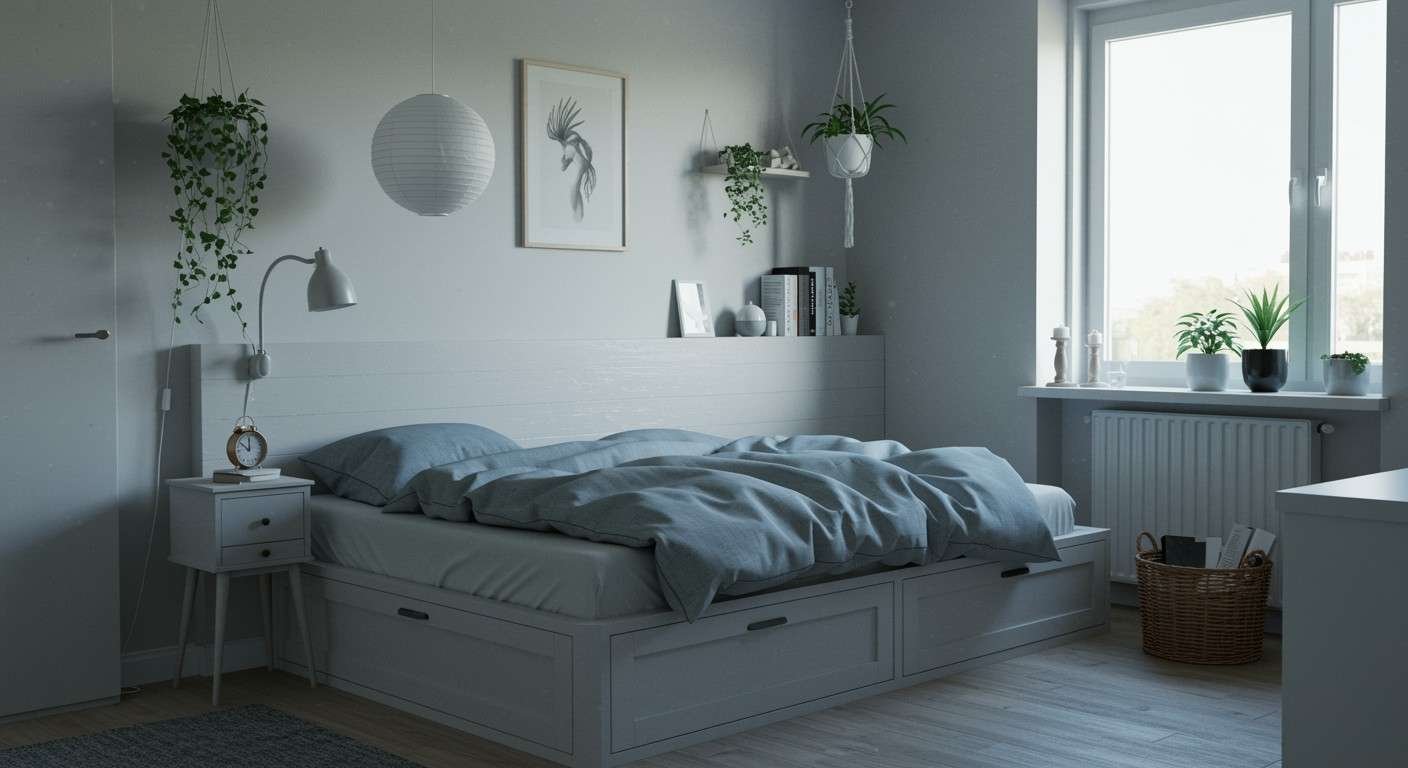
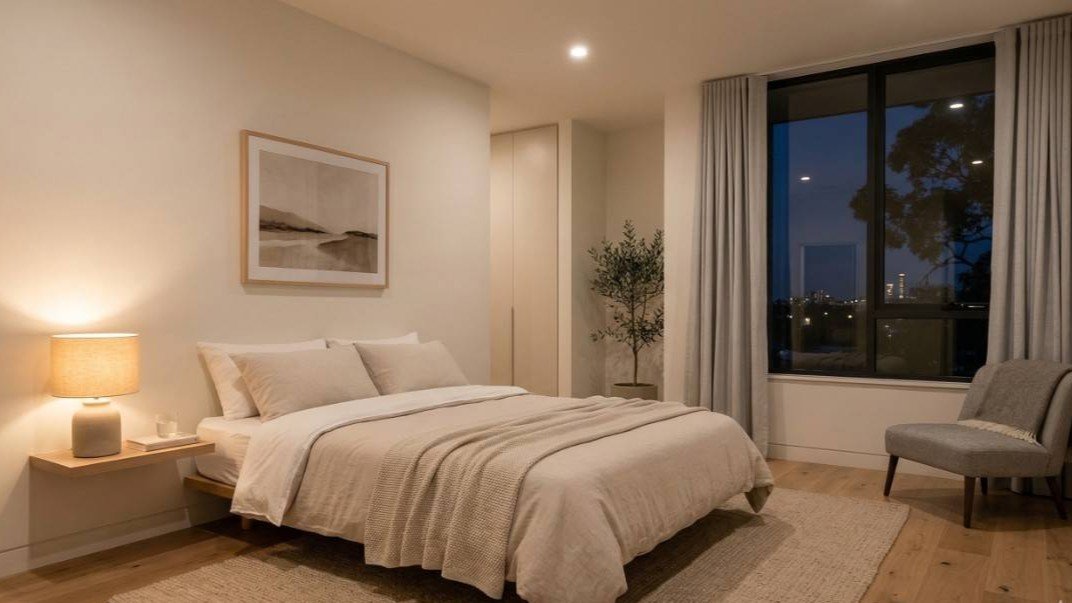
You spend roughly a third of your life in your bedroom. Yet for many people, it’s the last place they actually feel relaxed. The bed doubles as a desk. The nightstand is stacked with unread books and charging cables. The overhead light is too harsh, and the walls are painted a shade of “we never really thought about this.”
Why Your Bedroom Environment Matters More Than You Think
Sleep researchers have long known that the environment you sleep in directly affects sleep quality. Light, noise, temperature, clutter, and scent all send signals to your brain—either priming it for rest or keeping it on high alert.
The bedroom, in particular, holds significant psychological weight. When your brain associates the space with stress (answering emails in bed, scrolling through news before sleep, living in visual chaos), it becomes harder to mentally “switch off” when you actually want to sleep. The goal is to rebuild that association—to make your brain recognize the bedroom as a place for rest, not stimulation.
Small, deliberate changes to your environment can make a measurable difference. Here’s where to start.
Color Psychology: Choosing Calming Palettes
Color affects mood more than most people realize. Warm, saturated colors like red and orange stimulate the nervous system and raise alertness—great for a gym, not ideal for a bedroom. Cool, muted tones have the opposite effect.
The best colors for a sleep-supportive bedroom include:
- Soft blues and blue-grays – associated with calm, often linked to lower heart rate and blood pressure
- Sage and muted greens – evoke nature, soothing without being cold
- Warm neutrals – think sand, warm white, and greige; they’re gentle and versatile
- Dusty lavender – connected to relaxation and often used in spa environments
You don’t need to repaint the entire room to feel the difference. Even swapping out bright accent colors in your bedding, curtains, or decor for softer tones can shift the overall mood of a space.
Lighting Solutions for Better Melatonin Production
Melatonin—the hormone that makes you feel sleepy—is suppressed by bright, blue-spectrum light. This is why staring at a screen or working under fluorescent lighting at night makes it harder to fall asleep. Your bedroom lighting strategy should work with your body’s natural rhythms, not against them.
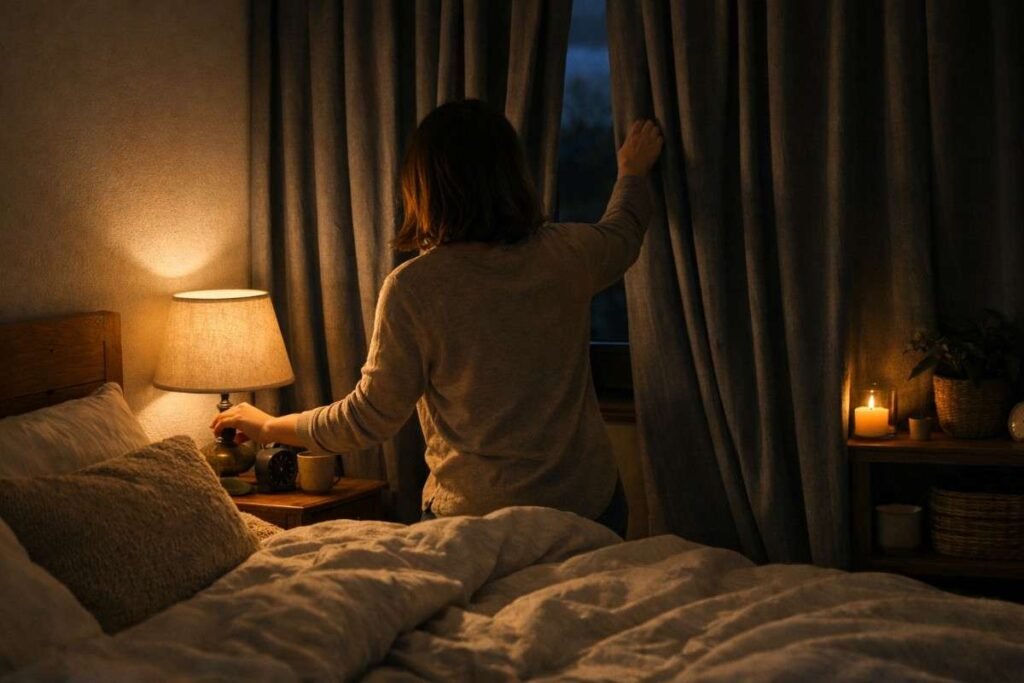
A few simple adjustments:
- Replace overhead bulbs with warm-toned alternatives (look for bulbs in the 2700K–3000K range)
- Use lamps instead of ceiling lights in the evening – lower light sources signal nighttime more effectively
- Install a dimmer switch if possible, so you can gradually reduce light levels as bedtime approaches
- Use blackout curtains to block early morning light, especially if you’re sensitive to sunrise wake-ups
The hour before bed is particularly important. Keep emergency lights at home for nighttime power outages. Dimming the lights during this window tells your brain that it’s time to wind down, making the transition to sleep much smoother.
Decluttering Techniques to Reduce Mental Stress
Visual clutter is a silent stressor. Research suggests that people who describe their homes as cluttered have higher levels of cortisol (the stress hormone) throughout the day. In a bedroom, clutter can make it genuinely harder to relax—even if you don’t consciously notice it.
The good news? You don’t need a minimalist overhaul. A few focused decluttering sessions can go a long way.
Start with these areas:
- The nightstand – keep it to essentials only (a lamp, a book, a glass of water)
- The floor – clear walking paths and surfaces; piles of clothing on chairs create low-level mental noise
- Under the bed – if you store things underneath, use proper containers with lids to keep it visually tidy
- The wardrobe – a chaotic closet creates decision fatigue before you even get dressed; organize by category or color
If decluttering feels overwhelming, try the “one surface at a time” method. Clear one area completely, live with the result for a week, then move to the next.
Selecting the Right Bedding and Textiles for Comfort
The physical materials in your bedroom have a direct impact on how well you sleep. Bedding, in particular, affects temperature regulation, skin comfort, and how quickly you can settle into deep sleep.

What to look for:
- Breathable natural fibers – cotton, linen, and bamboo all regulate temperature better than synthetic fabrics
- Thread count sweet spot – for cotton sheets, aim for 300–500 thread count; higher doesn’t always mean better
- Weighted blankets – for those who struggle with anxiety or restlessness, weighted blankets can have a calming effect
- Pillows matched to your sleep position – side sleepers need more loft, back sleepers less, stomach sleepers even less
And don’t overlook the foundation. A mattress that no longer supports your body properly will undermine everything else you do to improve your sleep environment. If you’re in the market for a new one, it’s worth exploring local options—searching for a mattress in American Fork, for example, can connect you with sleep specialists who can guide you toward the right fit for your body and sleep style.
Tech-Free Zones: Establishing Digital Boundaries
Phones and tablets in the bedroom are one of the most common—and most disruptive—sleep habits. The issue isn’t just the blue light. It’s the psychological activation that comes with checking messages, reading the news, or scrolling social media right before sleep.
Your brain processes emotional content even as you’re trying to wind down. A worrying headline or a stressful work email can raise cortisol levels at the exact moment you need them to drop.
How to create a genuine tech-free zone:
- Charge your phone in another room overnight
- Buy an old-fashioned alarm clock so you don’t “need” your phone for waking up
- Establish a hard cutoff—devices off 30–60 minutes before bed
- If you use your phone for white noise or sleep tracking, switch it to airplane mode
It feels uncomfortable at first. Within a week or two, most people report falling asleep faster and feeling noticeably less anxious at bedtime.
Sensory Additions: Aromatherapy and Soundscapes
Two often-overlooked tools—scent and sound—can significantly enhance the atmosphere of a bedroom. Both work below the level of conscious thought, which makes them particularly effective for promoting relaxation.
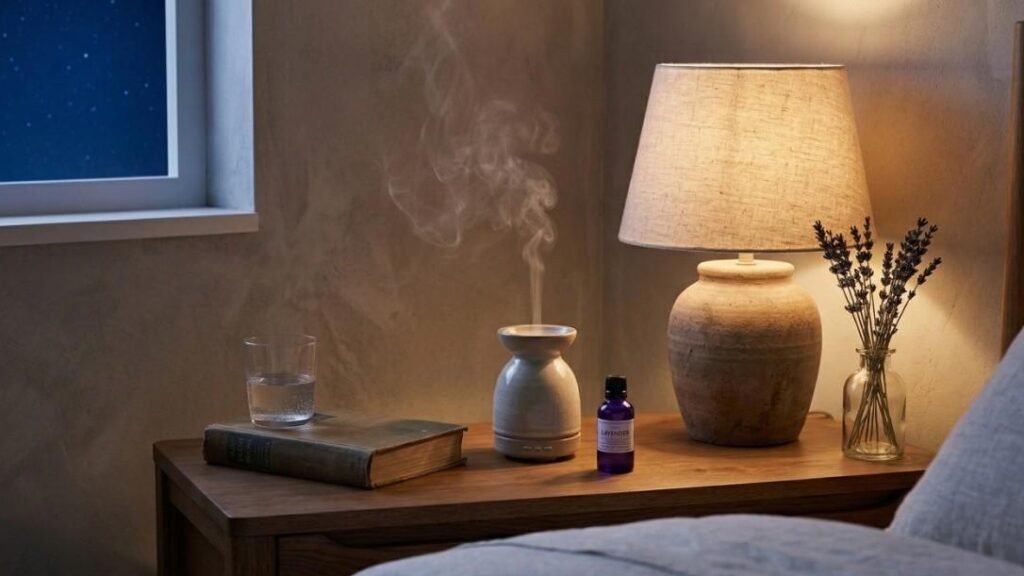
Aromatherapy:
- Lavender is the most studied sleep-supportive scent, with research suggesting it reduces anxiety and improves sleep quality
- Cedarwood contains cedrol, a compound linked to sedative effects
- Bergamot has calming properties similar to lavender but with a slightly citrusy, less floral note
- Use a diffuser, pillow spray, or dried herbs—whichever fits your preference
Soundscapes:
- White noise masks sudden sounds that might disrupt sleep, useful in noisy environments
- Pink noise (a softer version of white noise) is associated with deeper sleep in some studies
- Nature sounds—rain, ocean waves, forest ambience—can lower heart rate and promote a sense of safety
Both tools are inexpensive and easy to experiment with. Start with one (lavender oil in a diffuser, for instance) and give it a couple of weeks before adding others.
Conclusion
Create a bedroom without a big budget. Small changes can make a big difference. Your look for bedroom ideas for small spaces or big. Start with easy fixes: improve lighting, clear your nightstand, move your phone charger out, and add a calming scent. Each step builds on the last, creating a space that helps you unwind and improve sleep. Prioritize your bedroom and enjoy the benefits.