For decades, losing a tooth was often seen as inevitable—whether from a cavity, gum infection, or cracked molar—leading to options like bridges or dentures. But modern dentistry is changing that narrative by prioritizing saving natural teeth. With advancements like digital imaging and biomimetic materials, dentists now have better tools to preserve teeth with less pain and recovery.
Why Natural Teeth Are Worth Saving
Before getting into the technology, it’s worth understanding what’s at stake. Natural teeth aren’t just functional—they’re structurally integrated into your jaw and gums in ways that artificial replacements can’t fully replicate.
When a tooth is lost, the surrounding jawbone begins to deteriorate. Without a tooth root stimulating the bone, the body gradually reabsorbs it. This can alter your facial structure over time and complicate future dental work. Natural teeth also distribute bite pressure more evenly, support healthy gum tissue, and require no special maintenance beyond regular brushing and flossing.
Put simply, no implant or prosthetic—however advanced—performs exactly like the real thing. That’s why preserving natural tooth structure has become the guiding principle of modern dental care.
The Technology Reshaping Dental Treatment
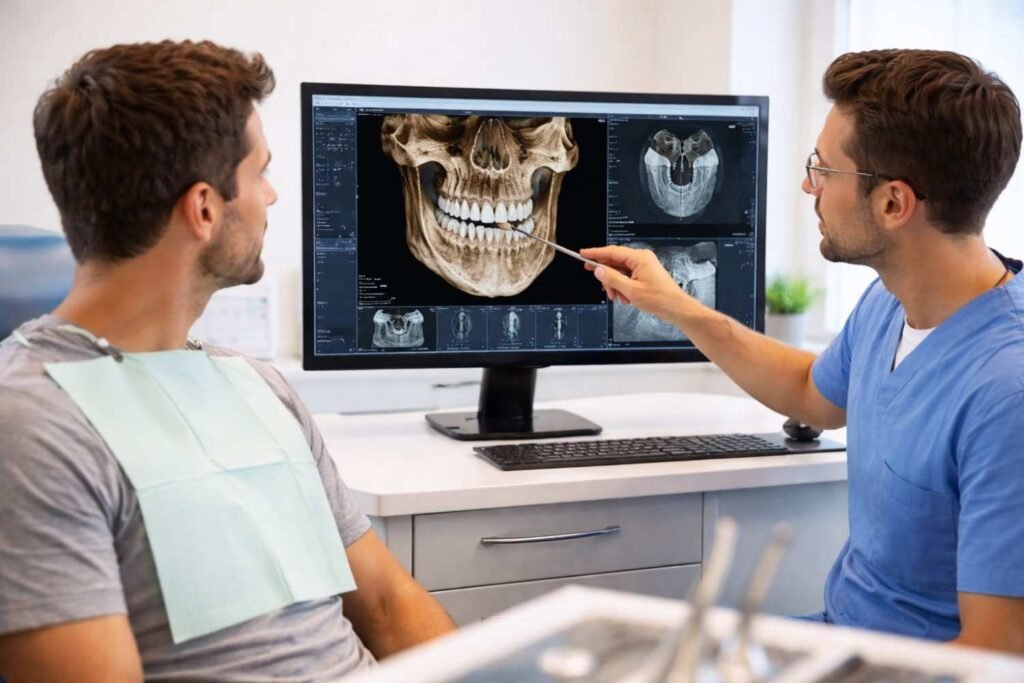
Modern dentistry looks dramatically different from what it did 20 years ago. Digital X-rays and 3D cone beam CT scans give dentists a precise, three-dimensional view of teeth, roots, and surrounding bone. This level of detail makes it possible to catch problems earlier, plan treatments more accurately, and intervene before minor issues become major ones.
Laser dentistry has also changed how many procedures are performed. Lasers can remove decayed tissue, treat gum disease, and assist in restorations—often with less bleeding, less discomfort, and faster healing than traditional methods. Patients who’ve avoided the dentist out of fear of pain are often surprised by how different the experience feels now.
Add to this the rise of digital impressions, same-day restorations using CAD/CAM technology, and AI-assisted diagnostics, and you have a profession that’s become as much about precision engineering as it is clinical care.
Root Canal Therapy: Not What You Remember
Few dental procedures carry more undeserved fear than the root canal. Mention it at a dinner party, and you’ll get winces. But the modern reality is far removed from the reputation.
Root canal therapy—or endodontic treatment—removes infected or inflamed pulp from inside a tooth, cleans and shapes the root canals, and seals them to prevent reinfection. The goal is to save a tooth that might otherwise need extraction.
Today, endodontists use rotary nickel-titanium instruments that make the process significantly faster and more precise than manual filing. Cone beam imaging provides a detailed map of the root canal system, including unusual shapes and hidden canals that could be missed with traditional X-rays. And with modern local anesthetics, most patients report feeling little to no pain during the procedure.
Periodontics: Stopping Gum Disease Before It Takes Teeth
Gum disease is one of the leading causes of tooth loss in adults—and one of the most preventable. The challenge is that it often progresses silently. By the time it becomes painful or visible, significant damage may already be done.
Advanced periodontics addresses this through earlier detection and more targeted treatment. Genetic testing can now identify patients predisposed to aggressive gum disease before any symptoms appear. Digital probing and 3D imaging allow periodontists to assess bone loss with greater accuracy, tailoring treatment to the specific stage and severity of disease.
When treatment is needed, laser-assisted procedures like LANAP (Laser-Assisted New Attachment Procedure) can remove diseased tissue and stimulate bone regeneration without the incisions and sutures required in traditional surgery. Recovery is faster, the procedure is less invasive, and—critically—more of the natural tooth structure is preserved.
Regenerative techniques, including bone grafting and the use of growth factors, can also rebuild support around teeth that might otherwise need to be extracted. What once seemed like a lost cause can often be stabilized and saved.
Restorative Dentistry: Rebuilding Teeth From the Inside Out
When a tooth is damaged—by decay, fracture, or wear—the restorative approach has traditionally involved removing healthy tooth structure to make room for a filling or crown. Biomimetic dentistry challenges that model.
The term “biomimetic” means mimicking nature. In dentistry, it refers to using materials and bonding techniques that replicate the physical properties of natural tooth structure: its flexibility, its strength under pressure, and its ability to handle temperature changes. Rather than cutting away healthy enamel and dentin, biomimetic techniques use adhesive bonding to rebuild the tooth with composite materials that bond directly to what remains.
The result is a restoration that behaves more like a natural tooth, places less stress on the surrounding structure, and requires less removal of healthy material. Patients also tend to experience less post-treatment sensitivity.
For more significant damage, dental crowns in Lafayette remain an important restorative option. Modern crowns, particularly those made from zirconia or lithium disilicate, are stronger and more lifelike than older porcelain-fused-to-metal versions. CAD/CAM technology allows many crowns to be designed and milled in a single appointment, reducing both time and the discomfort of temporary restorations.
Preventive Care: The First Line of Defense
All of these advanced treatments share a common goal: preventing extraction. But the most effective way to avoid invasive procedures is to prevent the damage that makes them necessary.
Preventive dentistry has become increasingly sophisticated. Dental sealants protect the grooves of back teeth from decay. Fluoride treatments—now available in higher concentrations for at-risk patients—remineralize early-stage decay before it becomes a cavity. Custom nightguards protect against tooth wear and fractures caused by grinding.
Nutrition counseling and oral hygiene coaching are also increasingly part of routine dental visits, recognizing that what happens at home between appointments has a direct impact on outcomes. Digital monitoring tools, including intraoral cameras and AI-powered cavity detection, help dentists catch issues at their earliest, most treatable stages.
Prevention isn’t glamorous, but it’s consistently the most cost-effective and least invasive way to maintain your natural teeth for life.
Conclusion
The cumulative effect of these advances is significant. A generation ago, a patient might have faced extraction, but today, they have real options to save their teeth. Procedures that once took multiple visits and long recovery times are now quicker and more comfortable. A tooth saved in your 30s can now last a lifetime, avoiding the costs and complications of replacements. The field has changed.